A dental website shows Google E-E-A-T (experience, expertise, authoritativeness and trust) when a patient can see who wrote each page, check that the dentist is licensed, read honest reviews and reach the practice without a struggle. In practice that means detailed dentist bio pages with degrees and license numbers, a “medically reviewed by” byline on every treatment page, citations to the ADA and NIH, before-and-after photos backed by signed consent, and About and Contact pages that leave no doubt about who runs the practice.
This guide builds each of those pieces from Google’s own documentation, then adds the dental rules Google does not cover: ADA specialty and board certification limits, the FTC’s 2024 review rule and HIPAA consent. It ends with a page-by-page checklist and a 100-point scorecard you can run on your own site this week.
Request Dental SEO Quote
Why Licenses, Specialty Claims and Reviews Decide Dental Trust
- Dental content is “Your Money or Your Life” (YMYL) content, and Google says its systems give even more weight to strong E-E-A-T on topics that can affect health.
- Google calls trust the most important part of E-E-A-T. For a practice, trust comes from verifiable licenses, real contact details, honest reviews and accurate clinical claims.
- Only 12 dental specialties are recognized through the ADA’s National Commission. “Board certified” and “specialist” claims outside that list carry ethical and state board risk.
- The FTC’s rule on fake reviews took effect in October 2024, and HHS settled with a California dental practice for $23,000 after it disclosed patient details in replies to online reviews.
- Score your site out of 100 with the audit scorecard below. Fix bio pages, bylines and review practices before you touch anything else.
Why Google Holds Dental Pages to a Higher Standard
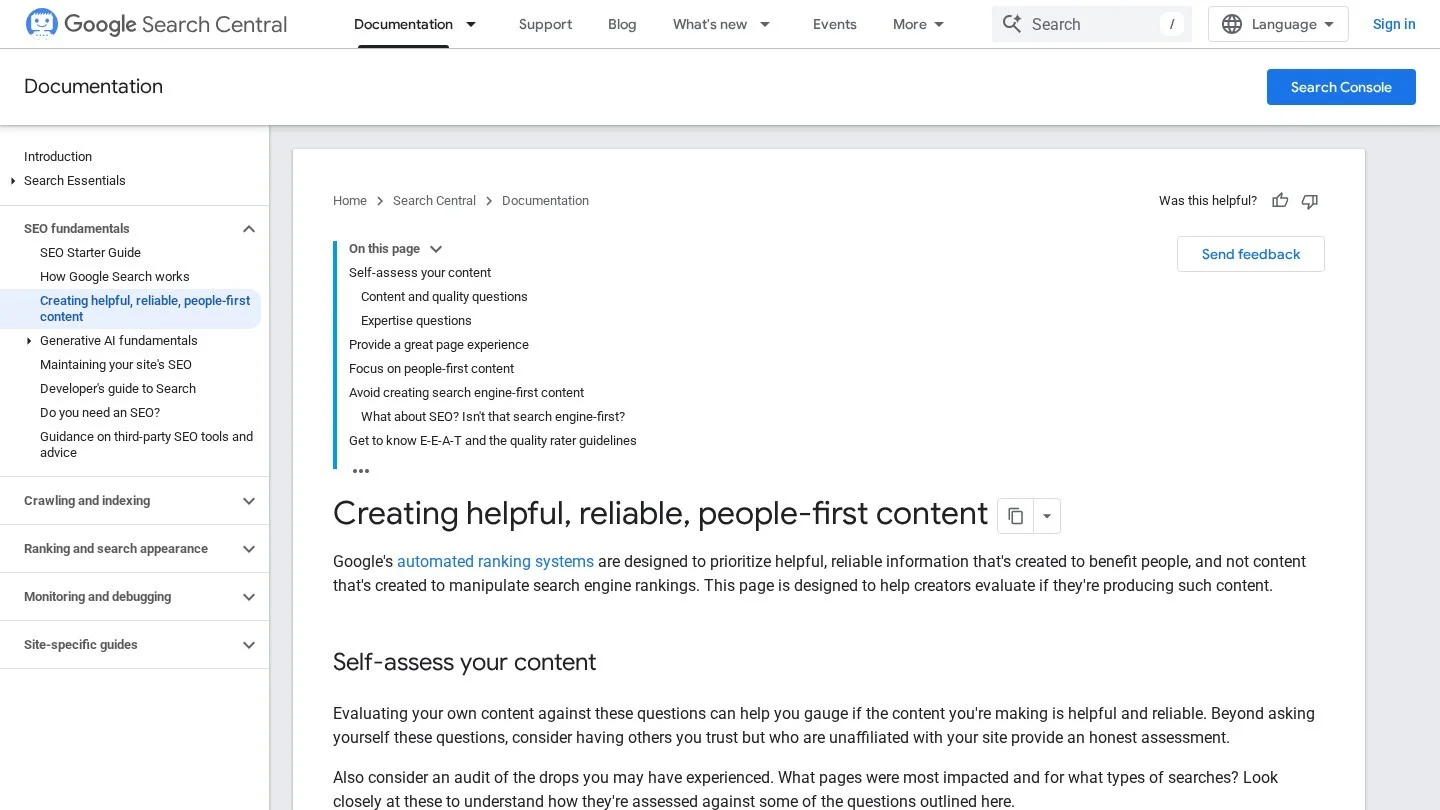
Google’s guide to creating helpful, reliable, people-first content explains the idea in plain terms. Its systems look for signals of experience, expertise, authoritativeness and trust, and “of these aspects, trust is most important.” For topics that “could significantly impact the health, financial stability, or safety of people,” Google says its systems “give even more weight to content that aligns with strong E-E-A-T.” A page about root canal pain or implant risks sits squarely in that group.
Google spells out these standards in its Search Quality Rater Guidelines. The current edition Google hosts is dated September 11, 2025 and runs to 182 pages, according to PPC Land’s tracking of the document. That edition groups YMYL topics into health or safety, financial security, and government, civics and society, plus a catch-all group. Dental care falls under health.
One point clears up a common myth. Raters do not rank your site. Google states that “rater data is not used directly in our ranking algorithms.” The guidelines describe what Google’s systems try to reward, so they work as a target, not a score. The letter “E” for experience was added in December 2022, when Google announced the change on its Search Central blog. For a dentist, experience is easy to show because you treat real patients every day. Most practice sites simply never show it.
Turning the Four Letters Into Proof a Patient Can Check
E-E-A-T is not a plugin or a score inside Search Console. It is a set of qualities that show up in what you publish and in what others say about you. The table below translates each letter into dental evidence and names the page where that evidence belongs.
| Quality | What it means for a practice | Evidence to publish | Where it lives |
|---|---|---|---|
| Experience | The dentist has done this treatment on real patients | Case counts the dentist can stand behind, consented before-and-after photos, chairside detail about recovery | Treatment pages, galleries, dentist bios |
| Expertise | The dentist has the training to give this advice | DDS or DMD, residency, specialty certificate, continuing education hours | Dentist bio pages, bylines |
| Authoritativeness | Others recognize the dentist or practice | Professional memberships, hospital privileges, teaching roles, local press, links from dental organizations | About page, bios, off-site profiles |
| Trust | The site is honest, accurate and safe to use | License numbers, full address and phone, privacy policy, cited sources, real reviews, clear fees or fee ranges | Every page, especially Contact and footer |
Notice that trust touches every page. A brilliant implant article loses much of its value if the footer has no address, the phone number differs from the Google Business Profile and nobody can tell which dentist wrote it.
Dentist Bio Pages That Prove Credentials, Not Just Friendliness
Most practice “Meet the Team” pages say the doctor loves hiking and has two dogs. That is pleasant, but it proves nothing. A strong bio page gives each dentist a separate URL and answers the questions a careful patient, or a quality rater, would ask before trusting their advice.
Degrees, Licenses and the State Lookup Link
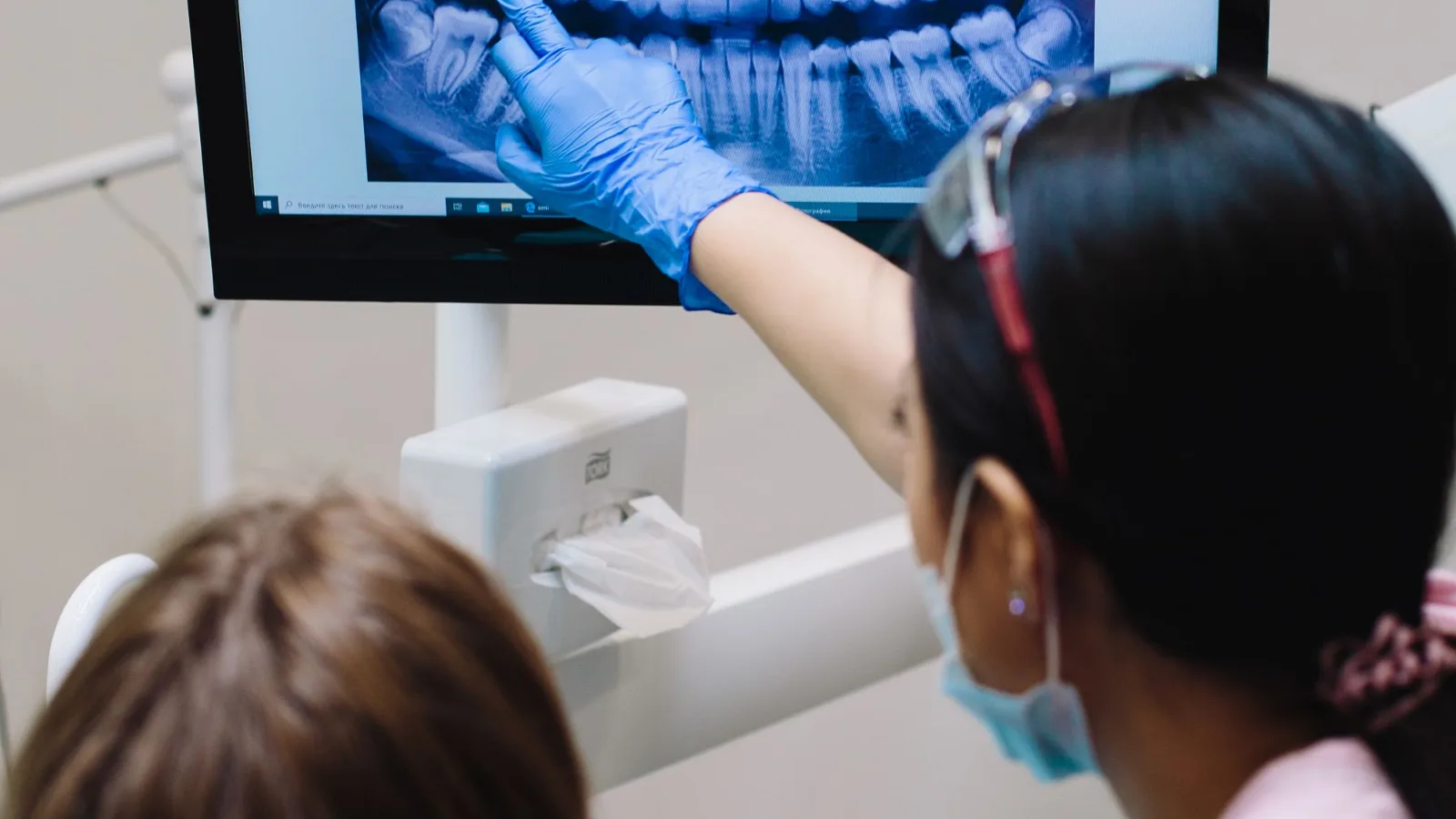
Start with the dental degree and the school that granted it. Patients often ask what the letters mean, so explain them once. The ADA’s MouthHealthy site notes that DDS and DMD are the same degree with different names, depending on the school. Then list any residency, such as a general practice residency or an AEGD program, and the year it was completed.
Next, add the state license number and a link to your board’s public verification search. State dental boards issue licenses, and a patient who clicks through and finds an active license has independent proof that you are who you say you are. The Dental Board of California, for example, offers online license verification. Few practice sites do this, which is exactly why it stands out.
ADA Membership and Professional Affiliations
List current memberships: the ADA, your state and local dental society, and groups tied to your clinical focus. Keep them current, since an expired membership on a live page is a small trust leak. Fellowships are a different matter. The ADA Code of Professional Conduct (with advisory opinions revised to October 2024) warns in Advisory Opinion 5.F.3 that announcing unearned degrees or fellowships that only show association may mislead the public. It suggests keeping those for scientific papers and CVs.
Specialty and Board Certification Rules That Trip Up Practices
This is where well-meaning bio pages get practices into trouble. The ADA’s National Commission on Recognition of Dental Specialties and Certifying Boards recognizes 12 specialties: dental anesthesiology, dental public health, endodontics, oral and maxillofacial pathology, oral and maxillofacial radiology, oral and maxillofacial surgery, oral medicine, orofacial pain, orthodontics and dentofacial orthopedics, pediatric dentistry, periodontics and prosthodontics. Each has a sponsoring organization that runs a national certifying board.

The ADA Code then sets three limits that matter for your bio copy:
- Section 5.H: dentists who announce a specialty should use “specialist in” and must devote enough of their practice to it. Only practices devoted entirely to a specialty may say they are “limited to” it.
- Advisory Opinion 5.I.1: a general dentist may not announce that they are “certified or a diplomate” in an interest area unless the credential meets the Code’s standards, the dentist states they are a general dentist, and the required disclaimer appears.
- Advisory Opinion 5.H.2: a specialist faces the same disclaimer test when announcing a credential outside a recognized specialty, such as implant dentistry.
Your state dental board’s advertising rules are the binding law, and they differ from state to state. Check them before anyone writes “board certified implant specialist” on a page. A safe pattern for a general dentist reads: “Dr. Shah is a general dentist with advanced training in implant placement.” It is accurate, it still targets the treatment, and it avoids a claim you cannot defend. If you practice in the UK, the GDC’s advertising guidance applies the same logic and requires each named clinician’s GDC number.
Experience Details Only a Real Dentist Can Write
Finish each bio with first-hand detail. Mention the treatments the dentist performs most, continuing education completed in the last few years, and the technology they actually use, such as a CBCT scanner or an intraoral scanner. Add a real photo taken at the practice. Stock photos of smiling strangers undo the work of everything else on the page.
Medical Review Bylines and Author Pages That Hold Up
Google’s helpful content guide asks three questions about any page: who created it, how, and why. On the “who,” it asks, “Do pages carry a byline, where one might be expected?” and “Do bylines lead to further information about the author or authors involved?” It adds that Google “strongly encourage[s] adding accurate authorship information, such as bylines to content where readers might expect it.” Patients expect it on health content.
Many practices hire writers or agencies, so the author is often not a dentist. That is fine if a dentist reviews the page and the byline says so honestly. A clear pattern looks like this:
- Written by: the writer’s name, linked to a short author page that states their background.
- Medically reviewed by: “Dr. Priya Shah, DDS,” linked to her full bio page.
- Last reviewed: a real date that changes only when a dentist actually rechecks the page.
- Sources: a short list of the clinical references used, linked where possible.
The “how” matters too. If AI tools helped draft a page, Google’s guide asks whether that use is clear to visitors where they would expect to know. A dentist’s review does not excuse factual errors, so the reviewer should read every clinical claim, not just skim the headings. Google’s guide asks directly: “Is this content written or reviewed by an expert or enthusiast who demonstrably knows the topic well?” and “Does the content have any easily-verified factual errors?”
Author pages for non-dentist writers should be short and honest: name, photo, role, writing background and the dental topics they cover. Never invent a credential or a dental degree for a writer. The same bylines and reviewer details help when you want your practice cited in Google AI Overviews, because AI answers lean on pages with clear sourcing.
Citing ADA, NIH and Research Without Overclaiming
Google’s guide asks whether content presents information “in a way that makes you want to trust it, such as clear sourcing.” For dental pages, the strongest sources are easy to name. The ADA’s patient site MouthHealthy covers most common treatments in plain language. The NIH’s National Institute of Dental and Craniofacial Research publishes health information on gum disease, dry mouth and oral cancer. For specific claims about success rates or materials, cite a peer-reviewed study listed on PubMed.
Cite at the point of the claim, not in a pile at the bottom. If a page says implants can last for decades with good care, link that sentence to the source. If you cannot find a source for a claim, cut the claim. The ADA Code’s Advisory Opinion 5.F.2 calls statements “likely to create an unjustified expectation about results the dentist can achieve” false or misleading. Advisory Opinion 5.F.7 extends that to social media posts that promise superior results or claim safety without scientific support.
Watch the small words. “Painless,” “permanent” and “guaranteed” are the phrases most likely to overstate what any dentist can promise. “Most patients describe the procedure as comfortable with local anesthesia” says something useful without making a promise you cannot keep.
Patient Reviews Within FTC and HIPAA Limits
Reviews are the clearest signal of what other people think of your practice, which is the heart of authoritativeness and trust. They also carry the most legal risk. Our dental Google reviews statistics show how much weight patients give them. These are the rules that keep that weight working for you.

What the FTC’s 2024 Rule Bans
The FTC’s final rule banning fake reviews and testimonials, announced on August 14, 2024 and published in the Federal Register that month, took effect in October 2024. As Davis Wright Tremaine’s summary explains, it bans fake reviews, including AI-written ones, and reviews from people with no real experience of the business. It also bans incentives conditioned on a positive or negative review. Reviews from staff or managers need clear disclosure, and suppressing negative reviews through threats is banned. Violations can bring civil penalties for each one.
Google adds its own layer. Its prohibited and restricted content policy forbids businesses from discouraging negative reviews or selectively asking only happy patients. The safe system is simple: ask every patient, the same way, with no reward attached.
Replying to Reviews Without Breaching HIPAA
A defensive reply can cost far more than a one-star review. In December 2022, HHS settled with New Vision Dental in California for $23,000 plus a two-year corrective action plan. The practice had disclosed patients’ names, treatment and insurance details while replying to online reviews. The HHS Office for Civil Rights director said plainly: “Providers cannot disclose protected health information of their patients when responding to negative online reviews.”
A safe reply never confirms that the reviewer is a patient. Try: “Thank you for your feedback. We take every concern seriously and would welcome the chance to talk. Please call our office manager at (555) 555-0142.” It is calm, it shows other readers you respond, and it reveals nothing.
Before-and-After Galleries Backed by Signed Consent
A gallery is the most direct proof of experience a cosmetic or implant practice can publish. It is also patient health information. HIPAA treats full-face photographs as identifiers in its de-identification standard, and HHS guidance on marketing under the Privacy Rule requires a patient’s written authorization before a practice uses protected health information for marketing. A gallery on your website is marketing.
Build the gallery around a signed authorization that names the specific photos, where they will appear (website, social media or both), and how the patient can withdraw consent later. Keep the signed form in the patient record. Then label each case so it informs rather than oversells:
- The treatment performed, such as “six porcelain veneers, upper arch.”
- The dentist who treated the patient, linked to their bio.
- The time between photos and the number of visits.
- A short note that results vary from patient to patient.
Use only your own cases. Photos from a lab, a manufacturer or another dentist imply experience you do not have, and the ADA Code’s warning about unjustified expectations applies. Do not edit photos beyond basic cropping and color balance.
About and Contact Pages That Answer “Who Runs This Practice?”
Google’s guide suggests a simple test: “If someone researched the site producing the content, would they come away with an impression” that it is trustworthy? Your About and Contact pages are where that research starts.
A strong About page names the owner dentist or dentists, the year the practice opened, and who owns it if it belongs to a dental group or DSO. Patients increasingly want to know this, and hiding it erodes trust. It should also describe the clinical team, link to every dentist bio and state the practice’s approach in specific terms. “We see emergency patients the same day when we can” says more than “we put patients first.”
The Contact page should carry the full street address, a phone number that matches your Google Business Profile exactly, opening hours, an emergency after-hours instruction, parking and transit notes, and an embedded map. Put the address and phone in the footer of every page too. If you run several offices, each one needs its own contact block and its own location page, a setup our multi-location dental SEO guide covers in detail. Add a privacy policy that explains how forms handle patient data, and keep the site on HTTPS.
Structured Data That Connects Each Dentist to the Practice
Schema markup does not create E-E-A-T, but it describes it in a form machines read without guessing. Mark up the practice with the schema.org Dentist type and each clinician with the Person type. Connect them with properties such as worksFor, alumniOf, hasCredential and memberOf. Treatment pages can use MedicalWebPage with reviewedBy and lastReviewed, so the “medically reviewed by” byline you show patients matches the data behind the page.
Google’s structured data guidelines require markup to match what is visible on the page, so the bio must show every credential the markup lists. Copy-ready JSON-LD for each of these is in our schema markup guide for dentists.
Page-by-Page E-E-A-T Checklist for a Dental Website
Different pages carry different parts of the load. Work through the site in this order, because the pages at the top get the most patient traffic and the most scrutiny.
Homepage
- The practice name, city and lead dentist appear above the fold with a real team photo.
- Address, phone and hours match the Google Business Profile character for character.
- Links lead to dentist bios, the About page and a reviews section that shows real patient reviews.
- Dentist and Organization markup is present and matches the visible details.
Service and Treatment Pages
- Each page for implants, Invisalign, veneers, root canals or emergency care has a “medically reviewed by” byline and a last reviewed date.
- The page names the dentist who performs the treatment at your office, explains who it suits, what happens at each visit, recovery and risks.
- Clinical claims link to MouthHealthy, NIDCR or a peer-reviewed study.
- Fees, fee ranges or a clear explanation of how pricing works appear on the page.
Blog Posts
- Every post has an author byline, a dentist reviewer for clinical topics and a visible date.
- Old posts are reviewed yearly. Out-of-date advice gets updated or removed, not left to sit.
- Posts answer real patient questions and link to the matching treatment page.
Location Pages
- Each office page lists the dentists who work there, its own hours, phone, map and parking notes.
- Photos show that specific office and team, not a shared stock image.
- Reviews shown belong to that location, and the page links to that location’s Google Business Profile.
Crawling tools speed this up. Our roundup of dental website audit tools shows which ones find missing bylines, broken bio links and invalid schema across a whole site in one pass.
The 100-Point E-E-A-T Audit Scorecard
Google does not publish an E-E-A-T score, so this scorecard is our own framework. It weights each area by how much it affects patient trust and how often we see it missing on dental sites. Score each line honestly, then fix the lowest areas first.
| Area | Full marks when | Points |
|---|---|---|
| Dentist bio pages | Every dentist has a separate page with degree, school, license number and lookup link, memberships and a real photo | 20 |
| Bylines and medical review | All clinical pages show author, dentist reviewer and last reviewed date, with linked author pages | 15 |
| Sources and claims | Clinical claims cite ADA, NIH or peer-reviewed sources, with no “painless” or “guaranteed” promises | 10 |
| Specialty and credential claims | Specialist and certification wording follows the ADA Code and state board rules | 10 |
| Reviews | Every patient is asked the same way, no incentives, and replies never confirm patient status | 15 |
| Before-and-after gallery | Own cases only, signed authorization on file, each case labeled with treatment, dentist and timeframe | 10 |
| About and Contact | Owner named, full NAP matching the Business Profile, hours, emergency instructions, privacy policy, HTTPS | 15 |
| Structured data | Dentist, Person and MedicalWebPage markup that matches visible content and validates | 5 |
| Total | 100 |
Worked example (illustration). Take a typical two-dentist general practice. It has a team page but no separate bios (8 of 20). Treatment pages have no bylines (3 of 15), and there are a few sources but one “painless implants” headline (5 of 10). Credential wording is fine (10 of 10). It asks for reviews well (12 of 15), but its gallery uses lab photos (2 of 10). Contact details are solid (13 of 15), and there is no schema (0 of 5). That adds up to 53 out of 100.
The fastest gains are clear. Separate bio pages could add 12 points, bylines another 12, and replacing the gallery with consented cases another 8. Those three projects alone would lift the score from 53 to 85. None of them require a new website, only a few weeks of a dentist’s review time and an editor.
Use these score bands as a guide: 80 or above means E-E-A-T is a strength, 60 to 79 means gaps are costing you trust, and under 60 means fix bios and bylines before you publish anything new. Pair the audit with our list of common dental SEO mistakes, since several of them, such as thin location pages, also drag down trust.
Dental E-E-A-T Questions Practice Owners Ask
Is E-E-A-T a Google Ranking Factor?
Not as a single score. Google says its systems look for a mix of signals that align with E-E-A-T and give them more weight on health topics. Quality raters use the guidelines to judge results, but Google states that rater data is not used directly in ranking.
Does Every Page on a Dental Website Need a Dentist Byline?
Every page with clinical advice should name a dentist author or reviewer. Pages such as the Contact page or a careers page do not need one. Google’s guide asks for bylines “where one might be expected,” and patients expect them on treatment and health content.
Can a General Dentist Say They Are Board Certified?
Only with care. Under ADA Advisory Opinion 5.I.1, a general dentist can announce a credential in an interest area only if it meets the Code’s standards, they state they are a general dentist, and they include the required disclaimer. State dental board rules control in the end, so check yours first.
Can AI-Written Content Meet E-E-A-T Standards?
Google judges the content, not the tool. An AI draft can be fine if a dentist checks every clinical claim, adds first-hand detail and puts their name on the review. Unreviewed AI pages with no byline fail on experience and trust.
Can We Post Patient Testimonials on Our Website?
Yes, if they are genuine, unpaid and published with the patient’s written authorization. Do not edit them to change their meaning. Under the FTC rule, staff or family testimonials need a clear disclosure of the connection.
How Long Does It Take to See Results From E-E-A-T Work?
Google does not give a timeline. Bios, bylines and reviews help patients the day they go live, which can lift calls and bookings even before rankings move. Search gains depend on your competition and how much of the site you improve.
A 30-Day Order of Work for Your Practice Website
In week one, run the scorecard and write or rebuild a bio page for every dentist, with license lookup links. In week two, add author and reviewer bylines to your ten most visited treatment pages, and remove claims you cannot source. In week three, fix the review request process and train the front desk on HIPAA-safe replies. In week four, replace any gallery photos that lack signed consent, tidy the About and Contact pages, and add the schema.
If you are planning a rebuild, choose a team that already works this way. Our list of dental website design services in the USA is a good place to start. If you would rather hand the whole audit to a specialist, you can request a dental SEO quote and compare proposals on how each agency handles bios, bylines and reviews.