Dental SEO usually takes four months to a year to pay off, and that is Google’s own estimate, not an agency excuse. Google has to discover your pages, store them in its index, compare them with every other dentist nearby and see evidence that patients trust you, and each of those steps runs on Google’s schedule rather than yours. A new implant page can be crawled in days, but reviews, links and a reputation for good clinical content build up over months.
The slow pace is also what makes dental SEO safe. The tactics that promise page one in 30 days are the same ones Google’s spam policies punish, and some of that damage cannot be undone. This guide explains why the timeline is what it is, what progress should look like month by month, which numbers to watch, and how to tell a patient agency from a stalling one.
Request Dental SEO Quote
What Practice Owners Should Expect From Dental SEO
- Google’s own hiring advice says SEOs usually need four months to a year to make changes and then see a benefit.
- Google says some changes show up in hours, while others take several months, and it suggests waiting a few weeks before judging any single change.
- Map pack rankings depend on relevance, distance and prominence. Prominence grows with reviews and links, and both take time to earn.
- Shortcuts such as paid links and mass-produced pages break Google’s spam policies. Google says the ranking benefit from spammy links that it discounts “cannot be regained.”
- Judge the first six months on leading signals such as indexed pages, Business Profile calls and new reviews. Judge months seven to twelve on new patients.
Google’s Own Answer to “How Long Does SEO Take?”
Google has addressed the timeline directly. In its “How to hire an SEO” video, Google’s Maile Ohye said that “in most cases, SEOs need four months to a year to help your business first implement improvements and then see potential benefit,” as Search Engine Roundtable reported when the video came out in 2017. Read that sentence carefully, because the clock covers two separate jobs: first implementing the improvements, then waiting for Google’s systems to respond to them.
Google’s current documentation says the same thing in smaller pieces. Its SEO Starter Guide warns that “every change you make will take some time to be reflected on Google’s end.” It adds that “some changes might take effect in a few hours, others could take several months,” and suggests you wait “a few weeks” before deciding whether a change helped.
Google’s page “Do you need an SEO?” adds the other half of the picture. It tells business owners to ask any SEO, “What kind of results do you expect to see, and in what timeframe? How do you measure your success?” It also states that “no one can guarantee a #1 ranking on Google.” In other words, Google expects a competent SEO to give you a realistic timeline and a measurement method, but never a guaranteed position.

Crawling, Indexing and Ranking: The Three Queues Every Page Waits In
Much of the waiting is mechanical rather than strategic. Google’s in-depth guide to how Search works describes three stages. In crawling, Google’s bots download your pages. In indexing, Google analyzes each page and stores it. In serving, Google decides which stored pages to show for a search. Your new “same-day crowns” page has to pass through all three stages before a prospective patient can find it in search results.
None of these steps is guaranteed. Google says plainly that it “doesn’t guarantee that it will crawl, index, or serve your page.” It also says that “not every page that Google processes will be indexed.” Google finds new pages mainly by following links from pages it already knows, or from a sitemap you submit. A page with no internal links pointing to it, buried three menus deep in the navigation, may sit undiscovered for weeks.
For a dental practice, this explains why early SEO work feels invisible. The first month is often spent fixing things patients never see: a sitemap that lists old pages, a staging site that blocks crawlers, or duplicate location pages that confuse Google about which one to index. These fixes do not create rankings on their own, but they clear the road so that later content and authority work can actually count.
Why the Map Pack Rewards Practices That Have Been Earning Trust for Years
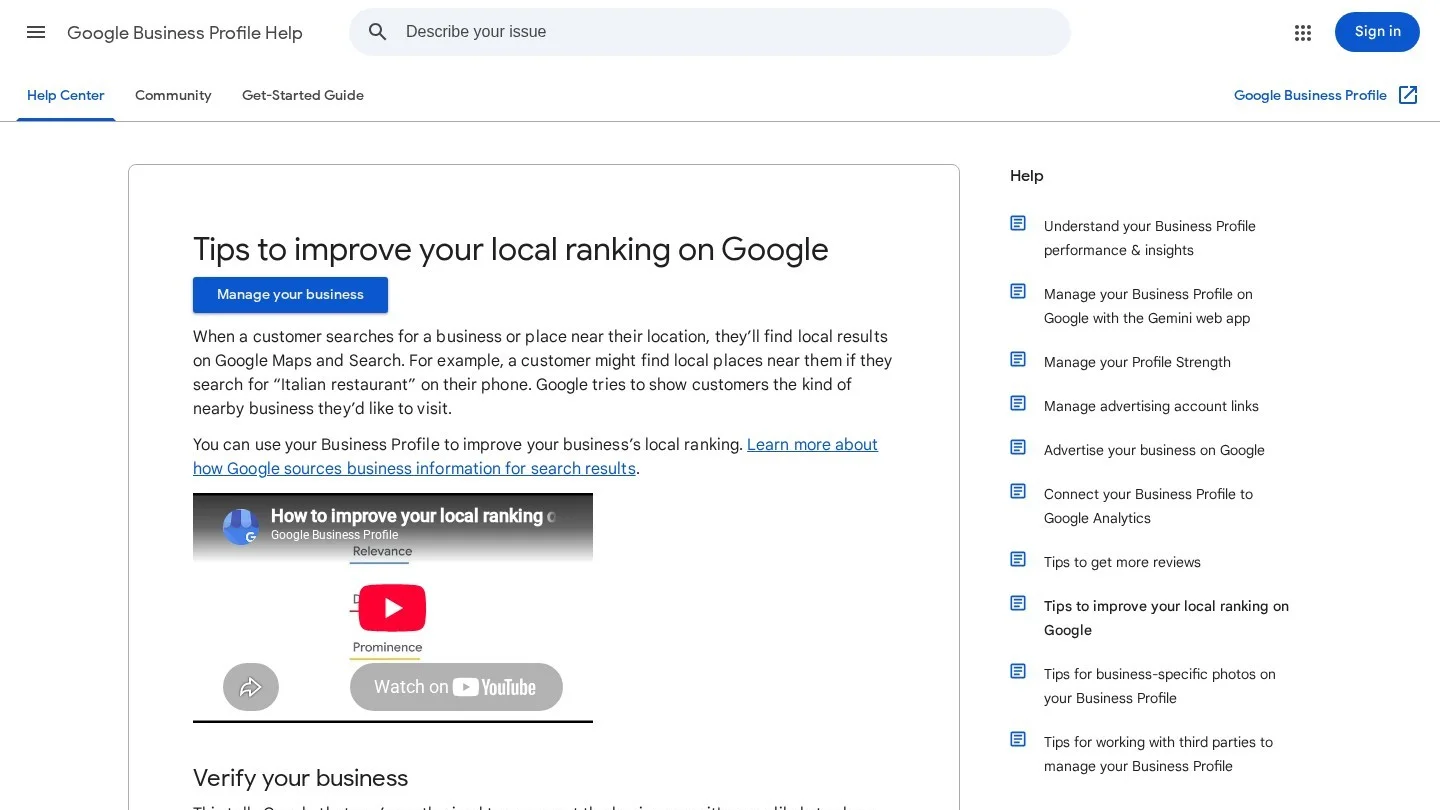
Most dental searches are local, so the map pack often matters more than the blue links. Google’s Business Profile help page on local ranking names three factors. Relevance is “how well a Business Profile matches what someone is searching for.” Distance is how far the practice is from the searcher. Prominence “means how well-known a business is.”
You can improve relevance quickly, since choosing the right primary category, listing services and keeping hours accurate takes an afternoon. You cannot change distance at all. Prominence is the slow, cumulative factor. Google says it draws on information from across the web, including “how many websites link to your business,” and that “more reviews and positive ratings can help your business’s local ranking.” It also says, “There’s no way to request or pay for a better local ranking on Google.”
That is why a practice that opened last spring struggles to outrank one that has collected reviews and local mentions for fifteen years. The established practice is not gaming anything; it simply has accumulated more independent evidence of its reputation. Our guide to ranking a dental practice on Google Maps walks through the profile work that speeds up the parts you can control.
Review Velocity: Why a Steady Trickle Beats a One-Week Blitz
Patients care about how recent your reviews are, not only how many you have. BrightLocal’s Local Consumer Review Survey 2026, based on 1,002 US adults, found that 74% of consumers look for reviews written in the last three months. Some 32% look for reviews from the last two weeks. The same survey found that 47% of consumers won’t use a business with fewer than 20 reviews.
This is the case for review velocity, meaning a steady rate of new reviews over time. A practice that asks every patient at checkout might add eight to twelve reviews a month. After a year, it has a deep and current collection of reviews that looks natural to patients and to Google. A practice that emails its whole list once may get fifty reviews in a week, then nothing for six months. By then, those reviews look outdated to the prospective patients reading them.
Building a review habit takes time because it depends on patient visits, and you can only see so many patients a week. The only fast alternatives are fake or bought reviews, which carry legal risk. Our dental Google reviews statistics show how review counts and ratings shape patient choice.

YMYL Rules Make Google Slower to Trust Health Content
Dental pages fall into a group Google treats with extra caution. Google’s guide to creating helpful, reliable, people-first content calls these “Your Money or Your Life” (YMYL) topics. For them, Google says, “our systems give even more weight to content that aligns with strong E-E-A-T,” which stands for experience, expertise, authoritativeness and trust. Google adds: “Of these aspects, trust is most important.”
Google trains human quality raters on these ideas through its Search Quality Rater Guidelines. The raters do not rank your site, and Google states that “rater data is not used directly in our ranking algorithms.” The guidelines simply describe what Google’s systems aim to reward. On a health topic, that means content written or reviewed by a real clinician, on a site that is open about who runs it.
Trust is earned gradually, and there is no shortcut around that. A dentist bio page, a “medically reviewed by” byline and cited sources help from the day they go live. Mentions in local news, links from dental groups and a growing review history take months. Our guide to building E-E-A-T into a dental website covers the pieces you can put in place this month.
The Shortcuts That Get Dental Websites Demoted
Nearly every practice owner eventually receives an email promising page one in 30 days. The methods behind those offers usually fall under Google’s spam policies for Google web search. Google warns that “sites that violate our policies may rank lower in results or not appear in results at all.” Three policies matter most for dental websites and the vendors who sell to them.
Paid Links and Link Schemes
Google defines link spam as “creating links to or from a site primarily for the purpose of manipulating search rankings.” Its examples include “buying or selling links for ranking purposes,” “excessive link exchanges” and links “with optimized anchor text in articles, guest posts, or press releases distributed on other sites.” Paid links are allowed only when they carry a rel=”sponsored” or rel=”nofollow” tag, which stops them passing ranking credit. A package that promises “50 high-authority dental backlinks a month” almost always fails this test.
Scaled Content Abuse
Google describes scaled content abuse as “when many pages are generated for the primary purpose of manipulating search rankings.” One example it names is “using generative AI tools or other similar tools to generate many pages without adding value for users.” For a dentist, the classic version is 200 near-identical pages, one per suburb, each saying “best dentist in [town].” Google’s doorway policy also covers “substantially similar pages that are closer to search results than a clearly defined, browseable hierarchy.”
Renting Another Site’s Reputation
Google’s site reputation policy covers “third-party content published on a host site mainly because of that host’s already-established ranking signals.” Some vendors sell placements for a practice’s content on big news or coupon sites to borrow their ranking power. Hosting third-party content is not a violation by itself, but publishing it mainly to ride the host’s reputation is.
Why the Damage Can Outlast the Shortcut
The real cost of a shortcut is measured in lost time. Google’s page on spam updates says a site may improve “if our automated systems learn over a period of months” that it now complies. For links, the news is worse. When Google’s link spam systems discount bad links, “any potential ranking benefits generated by those links cannot be regained.” You pay for the links, you lose whatever benefit they provided, and you then spend months recovering.
Core Updates Reset the Clock for Everyone
Even websites that follow every guideline move up and down. Google’s page on core updates says that “several times a year, Google makes significant, broad changes to our search algorithms and systems.” After a drop, Google says improvements can take effect within days, but “it could take several months for our systems to learn and confirm” a site’s gains. If nothing changes after several months, Google says that “could mean waiting until the next core update.”
This is one more reason to judge dental SEO over quarters, not weeks. A dip in the second month may have nothing to do with your agency. A rise in month five may owe as much to a core update as to new content. Trends measured over six to twelve months tell you far more than any single monthly report.
A Realistic Month-by-Month Dental SEO Timeline
The table below is an illustration, not a promise. It describes a typical single-location general practice with an existing website, a verified Business Profile and moderate local competition. A brand-new practice, or one in a dense city, should expect each phase to run longer. A practice with a strong review history may move faster.
| Period | Main work | What you should see | What you should not expect yet |
|---|---|---|---|
| Month 1 | Audit, tracking setup, Business Profile cleanup, crawl and index fixes | A written audit, call tracking live, Search Console and GA4 working | Ranking changes |
| Months 2 to 3 | Rebuild key treatment pages (implants, Invisalign, emergency), dentist bios, review request process | New pages indexed, steady weekly reviews, more profile views | Big gains for “dentist near me” |
| Months 4 to 6 | More service pages, local citations, first local links, content updates | Long-tail rankings, more Business Profile calls and website clicks | Top three for your most competitive terms |
| Months 7 to 9 | Link earning, content refresh, conversion fixes on top pages | Map pack gains in nearby areas, more form and booking leads | Even results across every suburb |
| Months 10 to 12 | Expand to secondary treatments and nearby areas, refine based on lead data | New patients from organic search you can count by treatment | An end to the work |
Notice the pattern in the table. Early months mainly produce completed work and leading indicators. Middle months produce rankings for longer, more specific searches, such as “same day emergency dentist open Saturday.” The broad, high-value terms come last because that is where local competition is strongest. A full plan for these stages is in our complete dentist SEO guide.
Leading and Lagging KPIs to Watch While You Wait
The hardest part of a slow marketing channel is knowing whether it is working at all. The practical solution is to separate your numbers into two categories. Leading indicators move first and show the work is landing. Lagging indicators move later and show the work is paying.
Google provides most of the leading data without charge. The Business Profile performance report shows views, the search terms people used, direction requests, calls and website clicks. Search terms data is “updated at the start of each month,” and it can take up to five days to appear. Google Analytics can now pull this data in too. Once you link your Business Profile to Google Analytics, a “Google Business Profile” report collection shows calls, directions and website clicks next to your site data. That link covers only the last six months and cannot be split by location.
| KPI | Type | Where to find it | When to expect movement |
|---|---|---|---|
| Pages indexed | Leading | Search Console, Pages report | Weeks 2 to 8 |
| Impressions for treatment terms | Leading | Search Console, Performance report | Months 2 to 4 |
| New reviews per month | Leading | Business Profile | Month 2 onward |
| Profile views and search terms | Leading | Business Profile performance | Months 2 to 5 |
| Calls and website clicks from the profile | Middle | Business Profile performance or GA4 | Months 3 to 6 |
| Organic form fills and online bookings | Lagging | GA4 key events | Months 4 to 8 |
| New patients from organic search | Lagging | Practice software plus call tracking | Months 6 to 12 |
| Production from organic patients | Lagging | Practice software | Months 9 to 12 and beyond |
The timing column is our illustration for a typical practice, not a Google figure. The rule behind it holds, though. If leading signals are flat after four months, ask hard questions. If they are rising but new patients are not yet, give the channel more time and check whether your front desk is converting calls. The tools that report these numbers are compared in our roundup of the best SEO tools for dentists.
Worked Example: When Does a Slow Start Turn Profitable?
The following illustration uses stated assumptions and was calculated in Python. These numbers are not a forecast for your practice, but they demonstrate why abandoning SEO early is so expensive.
- SEO fee: $3,000 a month (assumption for the example).
- New organic patients per month: 0, 0, 1, 2, 3, 4, 6, 7, 8, 9, 10 and 11 across the first year, then 12 a month after that.
- First-year collections per new patient: $1,200.
- Gross margin on that dentistry: 40%, so each new patient adds $480 of gross profit in year one.
In year one, the practice gains 61 new patients and $73,200 in collections. That is $29,280 of gross profit against $36,000 in fees, so year one ends $6,720 behind. The cumulative gap is deepest in month 7, at $13,320. From month 8 onward, each month’s gross profit is larger than the fee. At 12 new patients a month, the practice earns $2,760 more than it pays each month, so it breaks even in month 15.
Now consider an owner who cancels after month 4, having spent $12,000 and gained only 3 new patients. On paper, SEO “didn’t work.” In fact, they paid for the slowest part of the curve and left just before it turned. If you assume each patient is worth $3,000 in collections over five years, the 61 patients from year one alone are worth $73,200 in gross profit at 40% margin. That is about twice the year’s fees. Run your own numbers with our SEO ROI calculator for dental clinics.
How to Tell a Patient Agency From One That Is Stalling
“SEO takes time” is true, and it is also the easiest line for a weak agency to hide behind. The difference shows up in what they deliver while you wait. A capable agency can show you finished work every month, even before rankings improve, while a stalling agency sends a ranking report and little else.

Use these checks at the 90-day and 180-day marks:
- A written plan with dates. Google itself tells you to ask what results to expect and in what timeframe. A good agency puts its answer in writing at the start.
- A log of completed work. You should be able to see which pages were written or rebuilt, which technical fixes went live and which citations were cleaned up.
- Leading indicators that move. By month four, indexed pages, impressions and Business Profile actions should be trending up.
- Named link sources. Ask where every link came from. If the answer is vague, or the links sit on unrelated sites, treat it as a warning.
- Your accounts, your data. Google advises giving an SEO only read access to Search Console during an audit. Your practice should own the Business Profile, analytics and tracking numbers from day one.
Red flags include guaranteed rankings, a fixed number of links per month, hundreds of near-identical location pages, and reports that never mention calls or bookings. Google’s own hiring page says to avoid SEOs that talk about “link popularity schemes or submitting your site to thousands of search engines.” Our dental SEO pricing guide explains what a fair monthly fee should buy.
Ways to Win Patients Sooner Without Breaking Google’s Rules
Patience does not mean doing nothing for six months. Some activities pay off faster than others, and none of the following carries any spam risk.
Fix the Business Profile first. Accurate categories, services, hours, photos and a phone number that matches your website can lift calls within weeks, because the profile already exists and Google already trusts it. Start asking every patient for a review. It costs nothing and its effect compounds every week. Improve the pages you already rank for. Search Console shows terms where you sit on page two. A better implant or emergency page can climb faster than a brand-new one.
Answer the phone better. If 30 people call and only 15 book, training the front desk doubles the value of every ranking you earn. Use paid search as a bridge. Google Ads can bring patients next week while organic work matures. Our comparison of Google Ads versus dental SEO shows how to split a budget between the two.
Dental SEO Timeline Questions Practice Owners Ask
How Long Does Dental SEO Take to Work?
Google’s own hiring advice says most SEOs need four months to a year to make improvements and then see a benefit. For a typical practice, early signs such as more profile views and indexed pages appear in the first few months. New patients you can count usually follow between months six and twelve.
Why Is My Dental Website Not Ranking After Three Months?
Three months is still early for most practices. Check that your key pages are indexed in Search Console, that your Business Profile is complete and that reviews are coming in each week. If those leading signals are flat, the problem is the work, not the timeline.
Can a Dental SEO Agency Guarantee First Page Rankings?
No. Google states that “no one can guarantee a #1 ranking on Google” and advises finding someone else if an SEO promises first place. An honest agency will commit to the work it does and the results it expects, not to a fixed position.
Does a New Dental Practice Take Longer to Rank?
Usually, yes. Google’s local ranking uses prominence, which grows with reviews and links from other websites. A new practice starts with few of both, so it often wins long-tail and nearby searches first, then broader terms as its reputation grows.
Is It Safe to Buy Backlinks for a Dental Website?
Buying links that pass ranking credit breaks Google’s link spam policy. Paid links are allowed only with rel=”sponsored” or rel=”nofollow,” which means they do not help rankings. Google also says ranking benefits from discounted spam links cannot be regained.
Should I Switch Agencies If SEO Is Slow?
Switch if the agency cannot show completed work and rising leading indicators after four to six months. Do not switch only because rankings for your hardest terms have not moved yet. A new agency restarts much of the clock.
Set Your 90-Day Checkpoint Today
Write down three numbers now: indexed pages, Business Profile calls last month and reviews last month. Put a date 90 days out in your calendar and compare them then. If they are rising, keep going and give the lagging numbers time to follow. If they are flat, you have facts to bring to your agency instead of a feeling.
If you are still choosing a partner, you can request a dental SEO quote and ask each agency for a written timeline before you sign. Practices also asking how AI answers fit into this timeline can read our guide to AI SEO for dentists.