You get a dental practice listed on local business websites by joining or contacting the groups that run them. That means the chamber of commerce, the Better Business Bureau, Nextdoor, local news and community sites, and the teams and events you sponsor. Each one has its own entry process. Most ask for the same practice details and some proof that you are a real local business.
We looked at how real chamber directories list dentists in Des Moines, Grand Rapids and Manteca. We also read the BBB accreditation rules, the Nextdoor business page guide and the Google spam policies on links. This guide walks through each type of local site in the order most practices can tackle them.
Request Dental SEO Quote
Gather the practice details every local listing asks for
Put your listing details in one document before you contact anyone. Local sites ask for the same things again and again. When the details match everywhere, patients and search engines see one practice instead of three slightly different ones.
Here is what to collect:
- Practice name: Use the exact name on your signage and your Google Business Profile. Do not add keywords like “Best Dentist” to it.
- Address and phone: Use one main phone number and the same address format on every site. Suite numbers should be written the same way each time.
- Website URL: Link to the home page or the location page for that office. Multi-office groups should send each listing to its own location page.
- Hours: List normal hours and any evening or Saturday sessions.
- Short and long descriptions: Write one 50-word version and one 150-word version. Mention the main services and the neighborhoods you serve.
- Photos: Pick a logo, an outside shot of the building and two or three photos of the team or treatment rooms.
- Licence number: Some sites, Nextdoor included, let licensed providers add one.
Keep a simple tracker with the site name, the login, the date you applied and the live URL. You will need it later when you move offices or change your phone number. Our guide to dental citation management software covers tools that keep these details in sync for you.
Join your local chamber of commerce
A chamber directory is often the most trusted local business list in town. Members appear by category, and dentists usually get their own category page. The catch is that each chamber shows a different amount of detail, so check the directory before you pay dues.
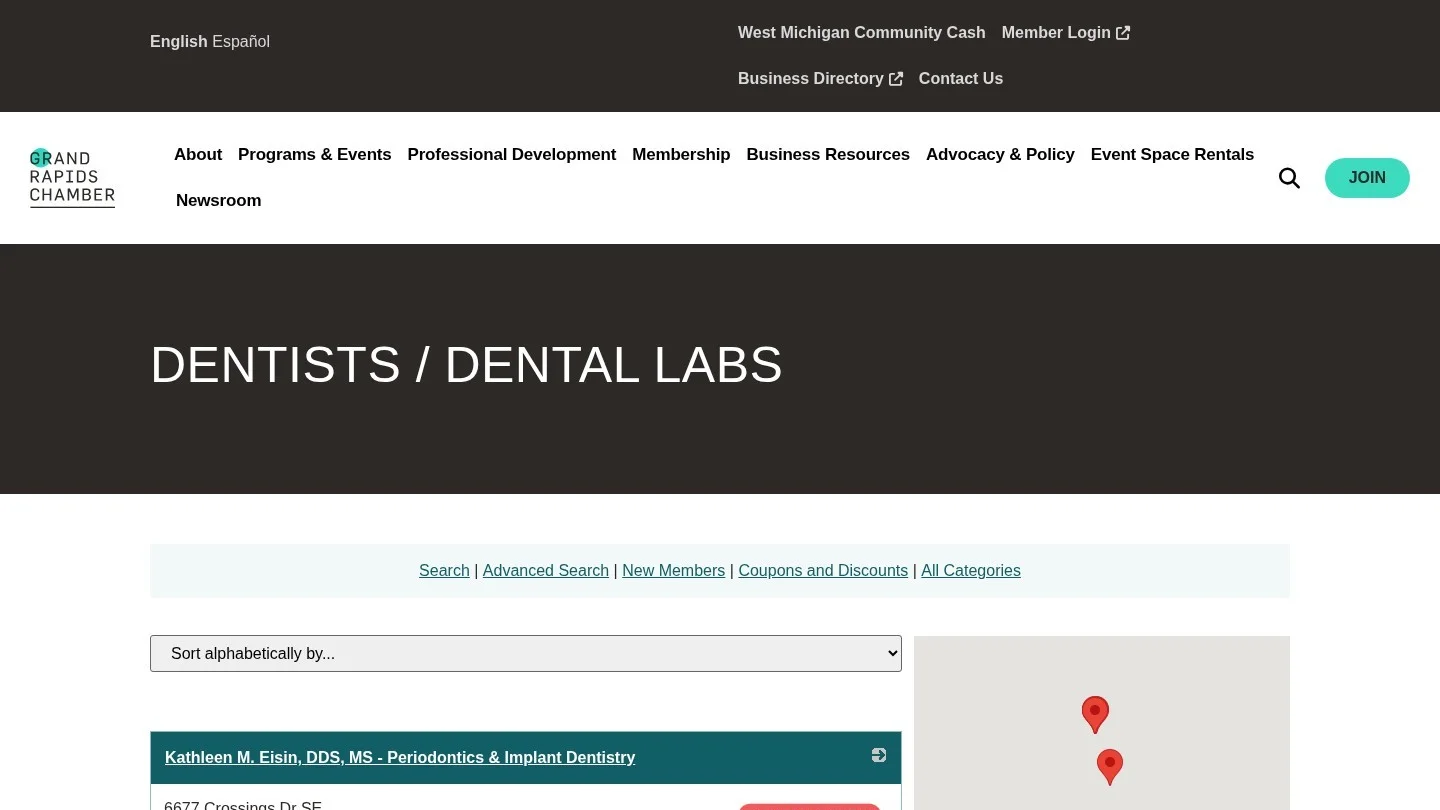
We compared three real chamber directories and found big differences:
| Chamber | Dental listings we counted | What each listing shows | Website link on the category page |
|---|---|---|---|
| Grand Rapids Chamber | 8 | Address, phone, Member Since year, social links, short description | Yes, a Visit Site link on most listings |
| Greater Des Moines Partnership | 16 | Address, phone, map link, short description on some | No |
| Manteca Chamber of Commerce | 7 | Practice name linking to a member profile | No |
The Grand Rapids listings do the most work. Most dental members get a Visit Site link, a phone number and a Member Since year. Some also carry ownership badges such as family-owned or woman-owned. The Greater Des Moines Partnership lists 16 dentists with address, phone and a map link. However, the category page does not link out to their websites. Manteca shows only names, and each name opens a member profile on the chamber site.
To join, call or email the chamber membership team. Grand Rapids, for example, asks non-members who want a listing to contact its membership team by phone. Ask three questions before you sign up:
- Does the dentist category page link to member websites?
- Can we add a description, photos and opening hours?
- Do members get any other exposure, such as newsletters, events or ribbon cuttings?
A chamber listing is more than a link. Membership also puts you in a room with local business owners, and their staff and families need a dentist too. Events like ribbon cuttings and member spotlights in the chamber newsletter can bring in patients who never search Google at all.
Apply for BBB accreditation if your practice qualifies
The Better Business Bureau gives every accredited business a profile page and a seal it can show on its own website. Patients who check a practice before they book often land on these pages. Accreditation is not automatic, though, and it comes with rules your team has to follow.
The BBB sets out eight Standards for Trust. Accredited businesses agree to build trust, advertise honestly, tell the truth, be transparent, honor promises, be responsive, safeguard privacy and embody integrity. In practice, that means answering complaints, backing up your advertising claims if asked and keeping at least a B rating.
There are two entry rules worth knowing before you apply:
- Time in business: The BBB asks that a business has been selling for at least six months. A practice that is opening soon will need to wait, unless the owner has run a similar business with a good track record.
- Fees: Accreditation costs a fee. The BBB says the amount depends on several things, including the size of the business, so ask your local BBB for a quote.
If you already have unanswered complaints on a BBB profile, fix those first. A low rating on a page that ranks for your practice name can do more harm than having no accreditation at all.
Claim a free Nextdoor business page
Nextdoor is where neighbors ask each other for recommendations, and “Can anyone recommend a good dentist?” is a common post. A business page lets your practice show up when neighbors tag or recommend you. Nextdoor says the business page is free.
You can claim the page in two ways. You can add it to an existing neighbor account from the profile menu, or you can create a separate business account with a shared practice email. The second option is easier if several staff members will manage the page.
Fill in every field Nextdoor offers:
- Logo or cover photo: Use your logo or a photo of the building front.
- Business details: Add your name, location and contact details. You can choose to show or hide the address.
- Licence number: Licensed providers can add one, which adds a layer of trust for health services.
- Category tags: Nextdoor allows up to 10 tags, and they help decide when you appear in search. Use tags like dentist, family dentist, pediatric dentist and cosmetic dentist if they match your services.
- Story and photo gallery: Explain how the practice started and show the team and treatment rooms.
Then ask happy patients to recommend you. Nextdoor says pages with recommendations get up to 19 times the page views of pages without them. Put the page link in your post-visit text message or email, next to your Google review link.
Get onto local news and community websites
Local newspapers, city magazines and community blogs often keep business directories, new resident guides and “best of” reader polls. These sites are read by people in your area, which is exactly who you want to reach. They are also hard for out-of-town competitors to copy.
Look for these openings in your town:
- Newspaper business directories: Many local papers run a directory of local businesses alongside their news site. Some are free and some come with an advertising package.
- Reader’s choice awards: Annual “best dentist” polls usually list every nominee on a results page. Ask your patients to vote when nominations open.
- New resident and relocation guides: City websites and real estate blogs often list local healthcare providers for people who just moved in.
- Community and neighborhood association sites: Some associations list local businesses that support their events.
Send a short email to the editor or the directory manager. Include your practice details, a two-line description and one reason your practice matters to their readers. For example, you might offer Saturday emergency appointments or a free school dental check day. Local editors want useful local information, not sales pitches.
Sponsor local teams and events without breaking link rules
Sponsoring a youth sports team, a school fundraiser or a charity run often earns a logo and a link on the sponsor page. These pages are local and real. However, a sponsorship is a paid arrangement, and Google has rules for paid links.
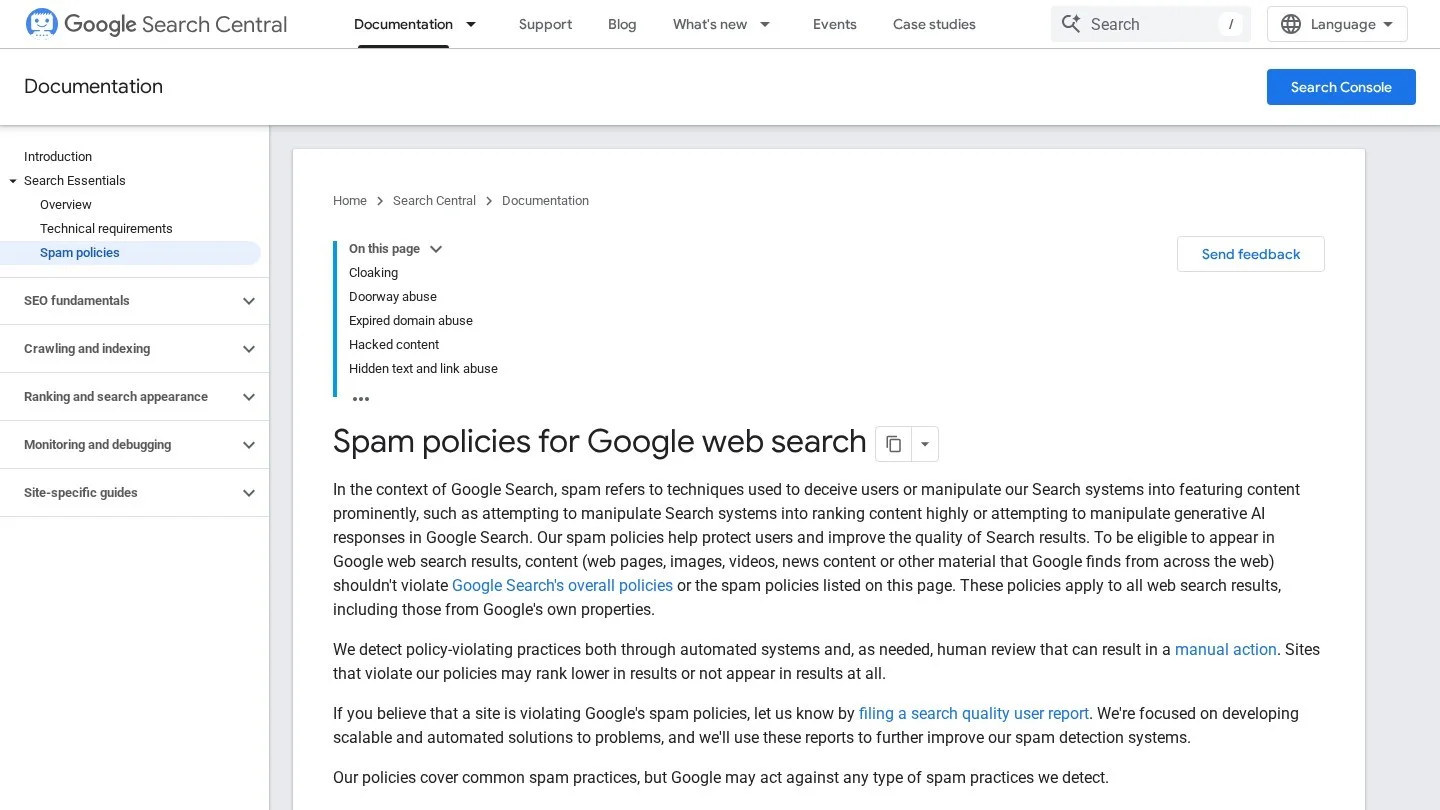
The Google spam policies list “buying or selling links for ranking purposes” as link spam. Google also says paid links for advertising or sponsorship are fine as long as the link carries a rel=”sponsored” or rel=”nofollow” attribute. So do not ask the club or charity to remove those attributes. Your reason to sponsor is local goodwill and visibility, not ranking credit.
Good sponsorships for a dental practice tend to share three traits. Families with children take part. The event repeats every year, so the sponsor page stays up. And your team can show up in person, for example with a mouthguard fitting day for a football club.
Skip directories that only exist to sell links
Not every “local business directory” is local. Some sites list thousands of businesses across every category and every country. They charge for a “featured” spot and promise higher rankings. Google names “low-quality directory or bookmark site links” as a type of link spam.
Watch for these warning signs before you submit:
- No real location focus: The site lists plumbers in Texas next to dentists in Sydney on the same page.
- Paid placement sold as SEO: The sales page talks about links or rankings instead of local readers.
- Automated or bulk submission offers: Google also lists automated programs that create links to your site as link spam.
- Footer and template links: Offers to add your link to the footer of many websites fall into the same spam category.
We go deeper on judging these sites in our guide to dental directory link quality. For a list of directories worth a dental practice’s time, see our 100 places to list your dental website.
Keep every local listing accurate after it goes live
A listing is only useful while the details are right. Practices move, add a second phone line or change their hours after a new hire. Old details on a chamber page or a news directory then send patients to the wrong place.
Set a review date twice a year. Open your tracker, visit each live listing and check the name, address, phone, hours and website link. Update anything that has changed. When you open a new office, add each new location as a separate listing that points to its own location page. Our multi-location dental SEO guide explains how to set up those pages.
Google says local prominence depends partly on how many websites link to your business. So the local listings that link to your site can help your Google Maps rankings too. Our guide to ranking in the Google local 3-pack shows how they fit with reviews and your Google Business Profile.
Questions dentists ask about local business listings
Do chamber of commerce listings help dental SEO?
They can help in two ways. A listing that links to your website gives you a real local link from a trusted organization. A listing without a link still confirms your name, address and phone number. The bigger benefit is often the people you meet through the chamber, who can send patients and referrals your way.
Should a dental practice pay for local directory listings?
Pay when the money buys real local exposure, such as chamber membership or a newspaper package that local people read. Do not pay a site that sells rankings. If a paid listing links to you, Google expects that link to be marked as sponsored or nofollow.
How many local business websites should a dental practice be listed on?
There is no set number. A handful of real local sites, such as the chamber, the BBB, Nextdoor, the local paper and two or three community pages, is more useful than hundreds of general directories. Add the main citation sites like Yelp on top of those. Our guide to Yelp search visibility for dentists covers that platform in detail.
Who should manage local listings at a dental practice?
The office manager is usually the best choice, since they know when hours, phone numbers or staff change. Give them the tracker and a twice-yearly review date. If you work with an agency, ask them to report which listings are live and which are pending.