
Dental treatment comparison keywords are the “X vs Y” searches patients make after a dentist offers two options, such as “implant vs bridge” once a tooth has to come out. A fair page on the pair, reviewed by the practice’s own dentist, is often the one that gets the consult booked.
We mapped 50 of them for dental clients, sorted by treatment area, and tagged each with the patient’s stage and the page type to target it with. Most practices need fewer than ten dedicated comparison pages. The rest go inside other pages, as a section on a treatment page or a short answer on a service page, and still pick up searches there.
Request Dental SEO Quote
What We Tell Practices Before They Write a “Versus” Page
- Build comparison pages only for pairs where you offer at least one of the two treatments.
- Answer the question in the first two sentences, then show a table that gives both options a fair hearing.
- Quote your own fee ranges or write “varies, ask for a quote.” Never borrow another clinic’s prices.
- Have the treating dentist review the page and name them on it with the review date.
- Use MedicalWebPage markup with reviewedBy and lastReviewed, and stop relying on FAQ markup, since FAQ rich results no longer show in Google Search.
- Avoid “better than” claims about other dentists, because the ADA Code calls unsupported superiority claims misleading.
Where “Versus” Searches Fall in a Patient’s Treatment Decision
Comparison searches come from five moments in a patient’s decision. The searches worth most to a practice come right after diagnosis, when the patient has heard two options in the chair and goes home to read up. A smaller group arrives for a second opinion, often after a quote that felt high.
| Patient stage | What they just heard or saw | Example search | What the page has to do |
|---|---|---|---|
| Early research | A friend’s new aligners, an ad, a social post | invisalign vs braces | Explain both options and who each one suits |
| Diagnosed | Two options from their dentist | root canal vs extraction | Lay out trade-offs and what happens next |
| Second opinion | A treatment plan they are unsure about | zirconia vs porcelain crowns | Explain why a dentist picks one material |
| Cost shopping | A quote | snap-in dentures vs fixed implant teeth | Show what drives the fee difference |
| After treatment | A new retainer or a toothache at night | fixed retainer vs removable retainer | Give care steps and when to call |
Diagnosed patients already need one of the two treatments and are the closest to booking, so pairs tagged “Diagnosed” lead the build order in the last section.
50 Dental Treatment Comparison Keywords by Treatment Area
Keywords are written the way patients usually type them, and next to each is the stage it most often comes from and the page type we’d point it at. The phrasing is ours, built from client search reports and the questions treatment coordinators hear at case presentation. Check each pair in your own Search Console data and Google Keyword Planner before you commit a page to it.
Missing Teeth and Tooth Replacement Comparison Keywords
| Comparison keyword | Patient stage | Page to target it |
|---|---|---|
| dental implant vs bridge | Diagnosed | Treatment comparison page |
| implants vs dentures | Diagnosed | Treatment comparison page |
| implant vs partial denture | Diagnosed | Treatment comparison page |
| snap-in dentures vs fixed implant teeth | Cost shopping | Treatment comparison page |
| All-on-4 vs traditional implants | Second opinion | Treatment comparison page |
| full dentures vs partial dentures | Diagnosed | Section on treatment page |
| flexible partial vs metal partial denture | Cost shopping | Section on treatment page |
| Maryland bridge vs implant | Second opinion | Section on treatment page |
| mini implants vs regular implants | Second opinion | Blog article |
| immediate dentures vs conventional dentures | Diagnosed | Section on treatment page |
Tooth replacement pairs carry the biggest treatment fees, so they get dedicated pages first. “All-on-4” is a Nobel Biocare trademark for its full-arch treatment concept, yet many patients use it for any full-arch implant bridge. If your practice uses another system, say so plainly on the page.
Straightening and Orthodontics Comparison Keywords
| Comparison keyword | Patient stage | Page to target it |
|---|---|---|
| Invisalign vs braces | Early research | Treatment comparison page |
| clear aligners vs metal braces | Early research | Treatment comparison page |
| ceramic braces vs metal braces | Cost shopping | Section on treatment page |
| lingual braces vs Invisalign | Early research | Section on treatment page |
| in-office aligners vs mail-order aligners | Early research | Blog article |
| fixed retainer vs removable retainer | After treatment | Q&A on service page |
| veneers vs Invisalign for crooked teeth | Early research | Treatment comparison page |
“Veneers vs Invisalign for crooked teeth” crosses two categories, and for a cosmetic practice it is one of the most useful pages to write. A general dentist offering aligners should present the service as general dentistry, since ADA Code section 5.I discourages wording that implies a specialty.
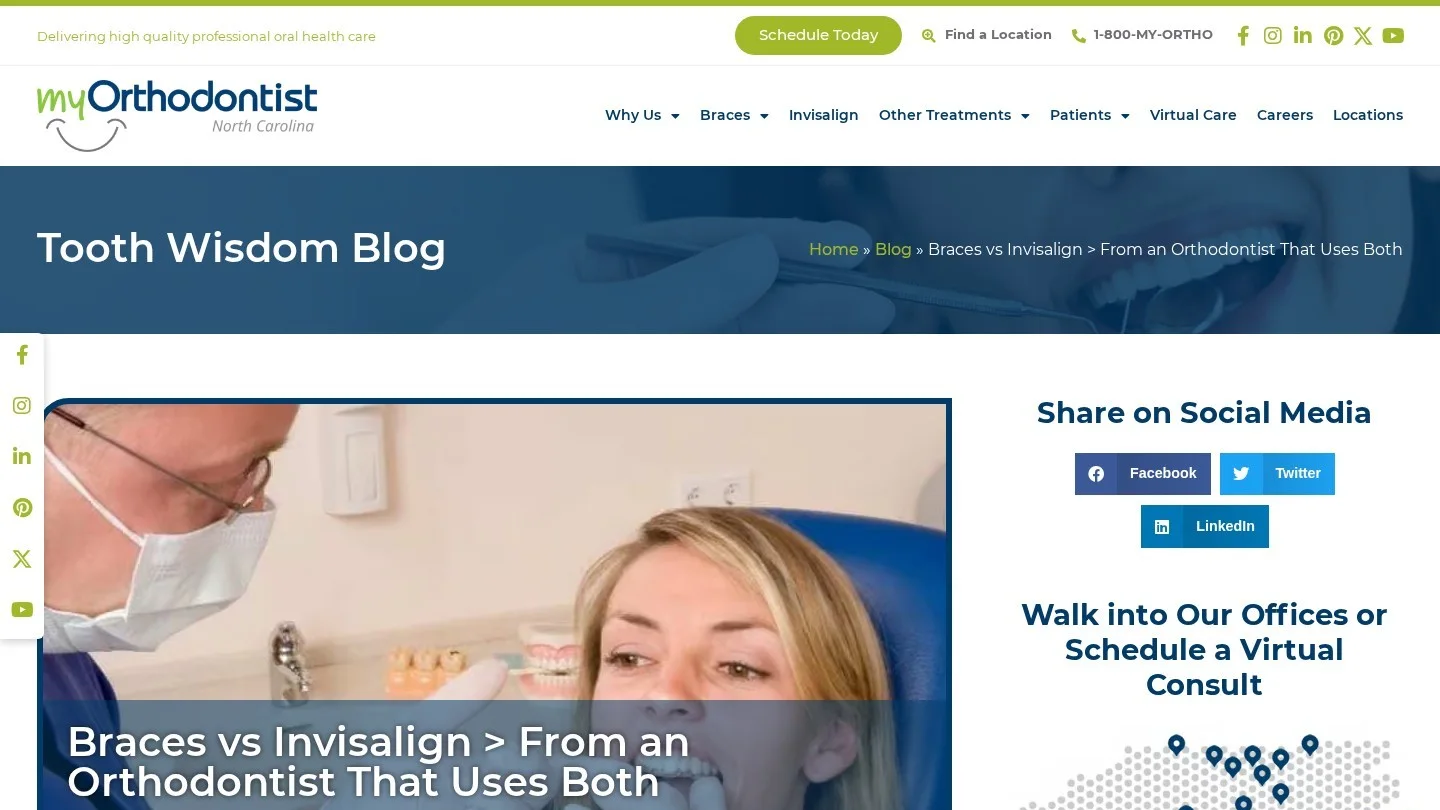
MyOrthodontist, a North Carolina practice that offers both treatments, compares braces vs Invisalign in one table with rows for treatment time and cost. Each column ends with a “NOT ideal for” row, so a reader sees when braces or aligners would be the wrong pick.
Cosmetic Treatments Comparison Keywords
| Comparison keyword | Patient stage | Page to target it |
|---|---|---|
| veneers vs bonding | Early research | Treatment comparison page |
| porcelain veneers vs composite veneers | Cost shopping | Treatment comparison page |
| veneers vs crowns | Second opinion | Section on treatment page |
| whitening strips vs in-office whitening | Early research | Treatment comparison page |
| take-home trays vs in-office whitening | Cost shopping | Section on treatment page |
| Lumineers vs traditional veneers | Early research | Blog article |
| laser vs scalpel gum contouring | Second opinion | Q&A on service page |
Our cosmetic dentistry keywords list covers the single-treatment and cost searches that sit around these pairs. On the comparison page, stick to the choice itself and link out to each treatment page.
Crown and Filling Comparison Keywords
| Comparison keyword | Patient stage | Page to target it |
|---|---|---|
| crown vs onlay | Diagnosed | Treatment comparison page |
| inlay vs onlay | Diagnosed | Section on treatment page |
| crown vs filling | Diagnosed | Section on treatment page |
| amalgam vs composite fillings | Early research | Blog article |
| zirconia vs porcelain crowns | Second opinion | Treatment comparison page |
| zirconia vs E.max crowns | Second opinion | Section on treatment page |
| same-day crown vs traditional crown | Cost shopping | Treatment comparison page |
| gold crown vs porcelain crown | Second opinion | Q&A on service page |
Zirconia vs E.max searches mostly come from patients holding a treatment plan with the material named on it, and they want to know why the dentist picked it. Keep that page short and let the dentist explain the choice in their own words.
Torrance Dental Spa in California keeps its onlays vs crowns post short, and Dr. Maral Ranjbar, DDS, signs it. She explains that an onlay suits moderate damage when enough healthy tooth remains, while a crown suits heavier damage or a tooth after a root canal.

Root Canal and Extraction Comparison Keywords
| Comparison keyword | Patient stage | Page to target it |
|---|---|---|
| root canal vs extraction | Diagnosed | Treatment comparison page |
| root canal vs implant | Diagnosed | Treatment comparison page |
| apicoectomy vs extraction | Second opinion | Section on treatment page |
| root canal retreatment vs extraction | Second opinion | Section on treatment page |
| wisdom teeth removal vs keeping them | Diagnosed | Blog article |
| IV sedation vs general anesthesia for wisdom teeth | Diagnosed | Q&A on service page |
Root canal vs extraction is the pair to write first for most general practices. The patient is often in pain and deciding within days, so put the emergency phone number above the comparison table.
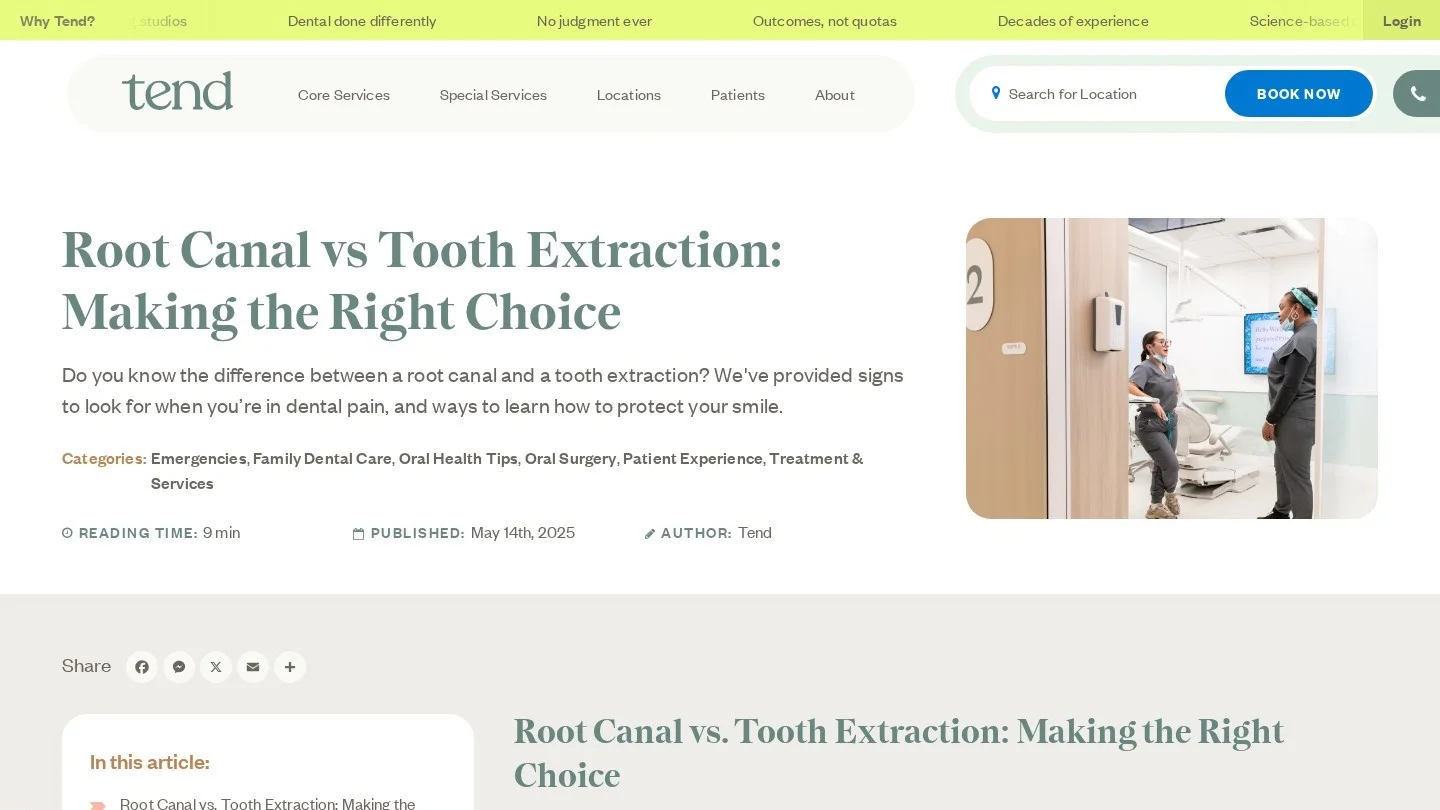
Tend, a dental group with studios in New York, Boston and several other US cities, gives each option its own pros and cons list in its root canal vs tooth extraction article. It also covers recovery for both and the implant, bridge or denture that usually follows an extraction.
Gum Care and Home Care Comparison Keywords
| Comparison keyword | Patient stage | Page to target it |
|---|---|---|
| deep cleaning vs regular cleaning | Diagnosed | Treatment comparison page |
| scaling and root planing vs laser gum treatment | Second opinion | Section on treatment page |
| electric vs manual toothbrush | Early research | Blog article |
| water flosser vs string floss | Early research | Blog article |
| custom night guard vs store-bought | Cost shopping | Section on treatment page |
Canyon Country Dental Care in California answers deep cleaning vs regular cleaning on a single page. It lists the signs that point to a deep cleaning, such as gum pockets deeper than 4 millimeters and bone loss on X-rays, and notes that insurance often covers the two at different rates.

Children’s Treatments Comparison Keywords
| Comparison keyword | Patient stage | Page to target it |
|---|---|---|
| sealants vs fluoride varnish | Early research | Q&A on service page |
| silver diamine fluoride vs fillings | Diagnosed | Section on treatment page |
| stainless steel crown vs zirconia crown for kids | Diagnosed | Section on treatment page |
| nitrous oxide vs oral sedation for kids | Diagnosed | Q&A on service page |
Parents word these searches differently, and they often search late at night. Our list of long-tail keywords for pediatric dentists groups parent searches by situation and maps them to pages.
Payment and Access Comparison Keywords
| Comparison keyword | Patient stage | Page to target it |
|---|---|---|
| dental insurance vs dental savings plan | Cost shopping | Blog article |
| emergency dentist vs urgent care for toothache | After treatment | Blog article |
| dental school clinic vs private dentist | Cost shopping | Blog article |
Payment pairs rarely need their own page, because one blog article on how your practice handles insurance and in-house membership plans covers them, and the front desk can send the link when patients ask.

Modifiers That Turn One Pair Into a Dozen Searches
Patients tack words such as “cost” or “which hurts more” onto most pairs, and the extra word tells you what they are weighing. Plan the page’s sections around those words, and give every modifier a visible answer somewhere on the one URL.
| Modifier | What the patient wants | Example |
|---|---|---|
| which is better | Wants a verdict | implant vs bridge which is better |
| cost / price | Budget check | zirconia vs porcelain crown cost |
| pros and cons | Weighing trade-offs | veneers vs bonding pros and cons |
| for front teeth / for molars | Location in the mouth | crown vs onlay for molars |
| how long does each last | Value over time | dentures vs implants how long do they last |
| which hurts more | Fear of pain | root canal vs extraction which hurts more |
| Wants patient stories | invisalign vs braces reddit | |
| [city] / near me | Ready to book | implant vs bridge Austin |
Patients add “reddit” because they want to hear from other patients. Give them real patient stories, with consent and any paid relationship disclosed, and they have less reason to leave for a forum thread.
Choosing the Page Type for Each Comparison Keyword
Four page types cover almost every pair, and the choice between them depends on whether you offer both treatments and how much money rides on the decision.
- Build a dedicated comparison page when you offer both treatments and patients ask about the pair at consults, especially if the fee gap is large. Implant vs bridge and root canal vs extraction belong here.
- When one treatment is the main service and the other is the usual alternative, add a section on a treatment page. Inlay vs onlay sits well inside the onlay page.
- Pairs where you offer neither option, or only one, go in a blog article. Electric vs manual toothbrushes and in-office vs mail-order aligners are two examples.
- Narrow pairs that take two or three sentences to answer, such as fixed vs removable retainers, need only a short question and answer on a service page.
Never build two pages for the same pair. “Invisalign vs braces” and “clear aligners vs braces” go on one page with both phrases in the copy. Two near-identical pages split links and leave Google to guess which one you meant.
Title Tags and H1s for Dental Comparison Pages
Put the pair first in the title tag and the deciding factor second, and let service pages end with the city. Keep each title near 60 characters so it is not cut off on a phone.
| Keyword | Title tag | H1 |
|---|---|---|
| dental implant vs bridge | Dental Implant vs Bridge: Which Lasts Longer? | Austin | Implant or Bridge for One Missing Tooth |
| root canal vs extraction | Root Canal vs Extraction: Saving or Removing a Tooth | Should You Save the Tooth or Remove It? |
| veneers vs bonding | Veneers vs Bonding: Cost, Lifespan and Results | Austin | Porcelain Veneers or Composite Bonding |
| zirconia vs porcelain crowns | Zirconia vs Porcelain Crowns: Why Your Dentist Chose One | Zirconia or Porcelain for Your New Crown |
| whitening strips vs in-office whitening | Whitening Strips vs In-Office Whitening: What Changes | Store Strips or a Professional Whitening Visit |
| dentures vs implants | Dentures vs Implants: Fit, Care and Cost in Austin | Dentures or Dental Implants for Missing Teeth |
The title tag carries the exact search phrase. The H1 is read by someone already on the page, so it can drop the “vs” and sound like the question they asked their dentist.
Finding More Comparison Searches in Your Own Data
Start in Google Search Console, where the Performance report lets you filter queries with a regular expression. Choose “Custom (regex)” in the query filter and paste a pattern such as \b(vs|versus|or|better|difference|compared)\b. You get the comparison searches your site already shows up for, with clicks and impressions for each.
Then type each treatment into Google followed by “vs” and note the autocomplete suggestions. Open the People Also Ask box under each result, since its questions often name the pair the patient is stuck on. For rough demand, enter your pairs in Google Keyword Planner under “Get search volume and forecasts,” or start from a treatment page URL under “Discover new keywords.”
Ask your treatment coordinator to log every “what’s the difference between” question for a month, and you’ll get the patient’s own wording plus pairs no tool suggests, such as “bone graft vs no bone graft before an implant.”
Building a Comparison Page That Ranks and Books Consults
Open with the answer, in two sentences that tell the reader who usually suits each option and what the dentist checks before choosing. The rest of the page follows this order.
- First comes a fair comparison table, with the same rows for both options and every cell filled in by the dentist.
- Next, a section on who each option suits describes the clinical situations where the dentist picks one over the other.
- What the visits look like covers how many appointments each option takes and how long healing lasts.
- Under cost and coverage, give your fee ranges or a clear request to ask for a quote, and note where insurance usually treats the two options differently.
- The dentist’s note is a short, signed paragraph in the dentist’s own words about how they decide between the two.
- Short answers to modifier searches like “which hurts more” go in a patient questions block.
- A single booking step, either a consult link or a phone number, sits after the table and again at the end of the page.
A Fair Comparison Table for Implant vs Bridge
Use neutral row labels and let each option win the rows it actually wins. If every row flatters the treatment the practice prefers, the page reads like an ad, and patients notice.
| Question | Dental implant | Fixed bridge |
|---|---|---|
| How the ADA patient site describes it | “Most similar to a natural tooth” | “Anchored to your adjacent teeth” |
| Who can remove it | Dentist fills in | Only a dentist can remove a fixed bridge |
| Effect on neighboring teeth | Dentist fills in for your cases | Dentist fills in for your cases |
| Number of visits and healing time | Dentist fills in | Dentist fills in |
| How it is cleaned at home | Dentist fills in | Dentist fills in |
| Fee range at this practice | Your range or “varies, ask for a quote” | Your range or “varies, ask for a quote” |
The dentist fills every cell except the quoted ones, which use the ADA’s MouthHealthy wording on missing teeth and bridges. A row that says “depends on bone height, which we check on a scan” earns more trust from patients than a bold claim.
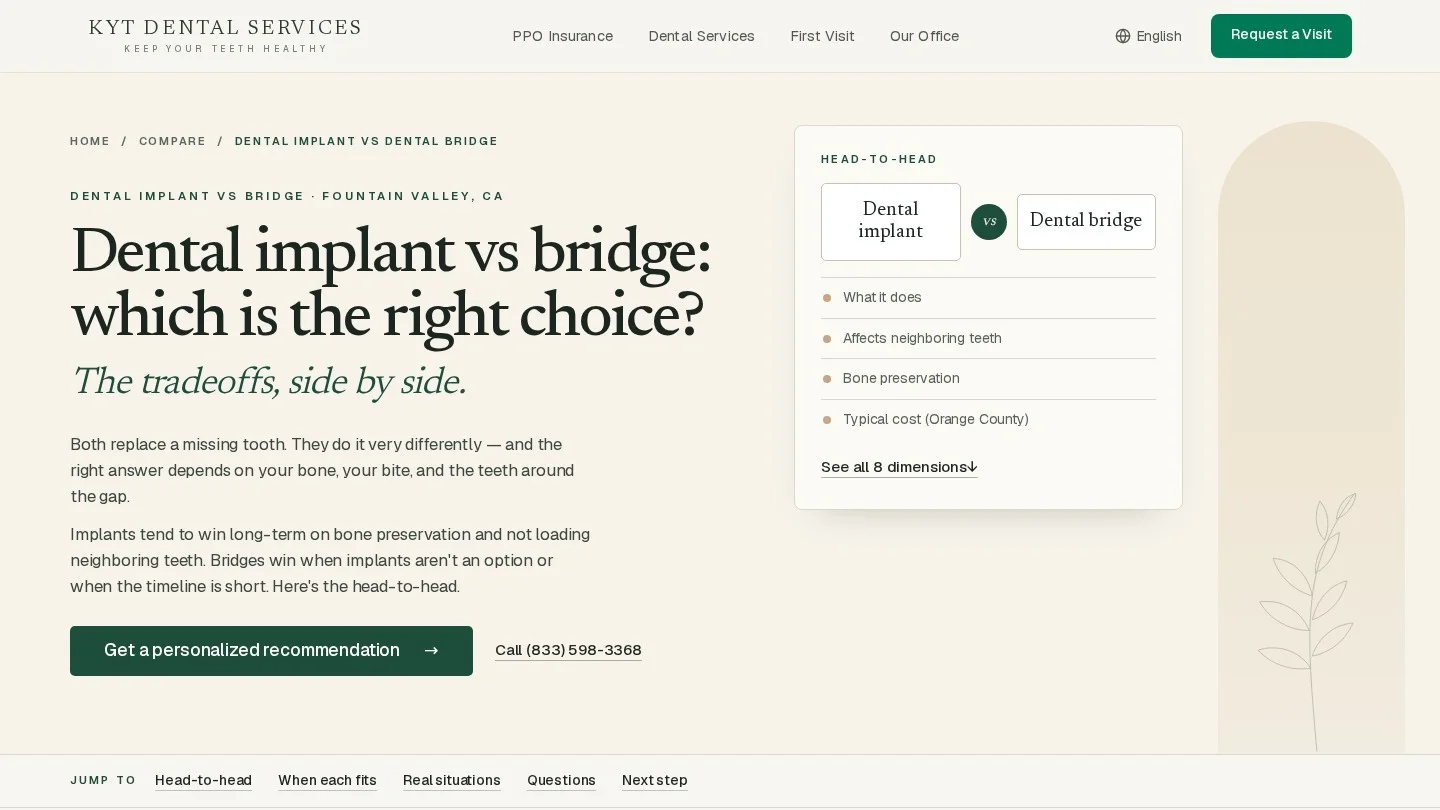
KYT Dental Services in Fountain Valley, California, builds its implant vs bridge page around a table like this. The bridge wins the rows for upfront cost and treatment time, and the implant wins the rows on neighboring teeth and bone.
Putting Cost on a Comparison Page Without Guessing
Never copy fee ranges from another clinic’s site or an article. Fees depend on materials, lab, region and case complexity, and a borrowed number becomes your promise once it is on your page.
Pull a range from your own last 12 months of cases. The 25th to 75th percentile of what patients actually paid is a range you can defend. When the spread is too wide to publish, write “Fees vary with your case. We give a written quote at your consult.” and explain what drives the difference.
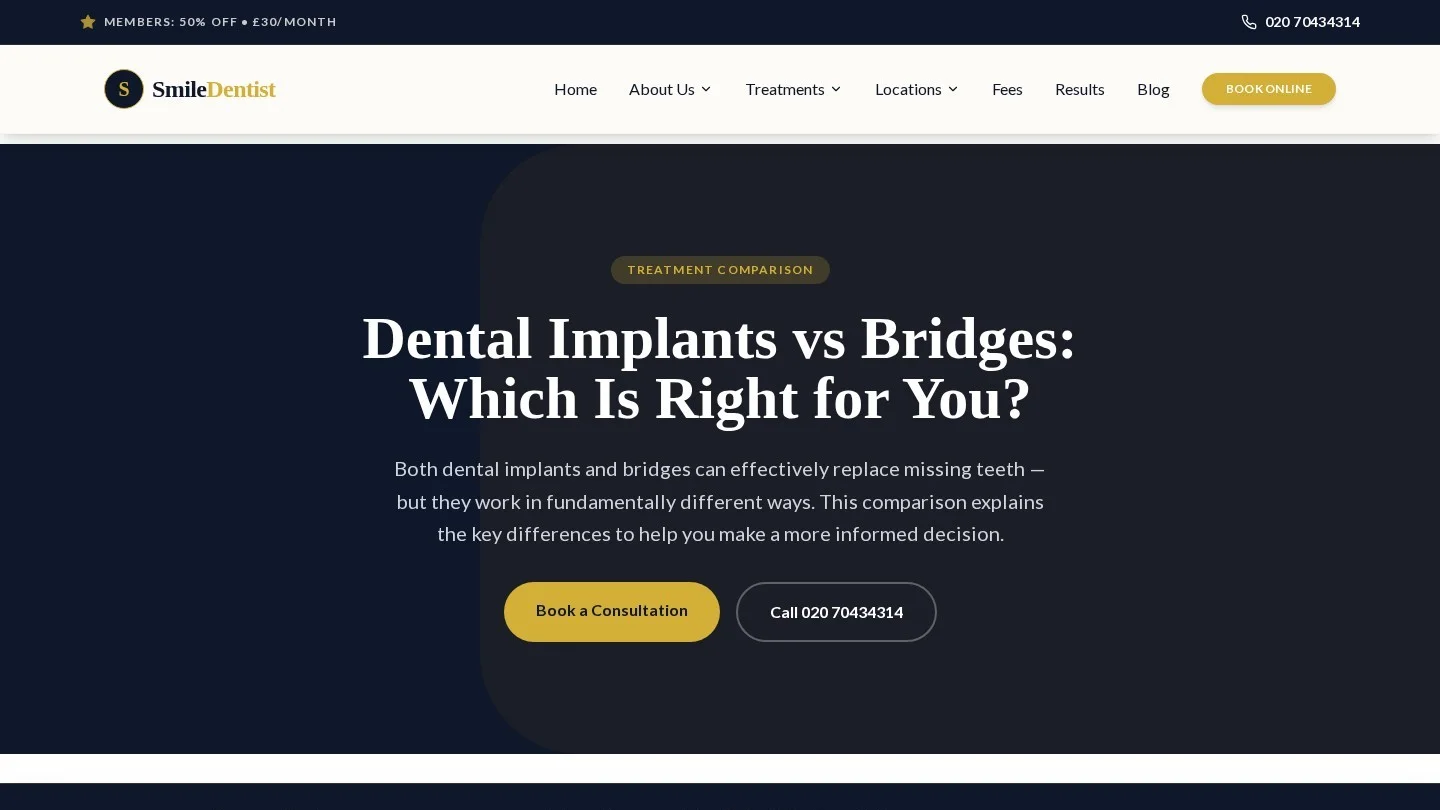
Smile Dentist London prints its own fees in its implants vs bridges comparison, with implants from £2,950 including the abutment and crown and bridges from £995 per unit. The same table has a “Suitability” row that describes which patients each option fits.
For benchmarking, the ADA publishes a Survey of Dental Fees through the ADA Store. The 2022 edition covers more than 200 common procedures, with national averages for general dentists and each specialty and regional averages for nine Census divisions, and ADA members can download it free. Use it to check your schedule, and keep its numbers off the public page.
Medical-Accuracy Review Before a Comparison Page Goes Live
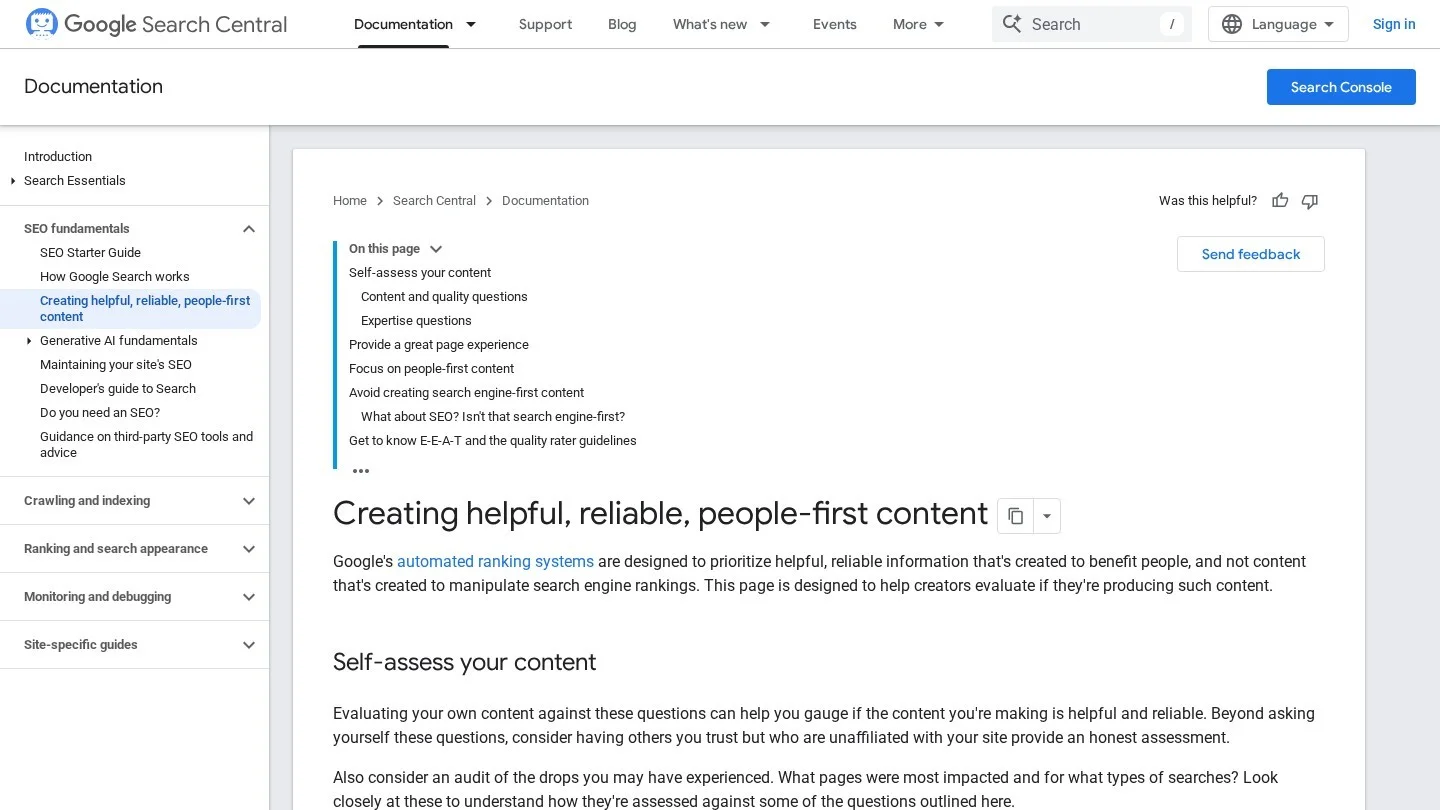
Treatment comparisons are health content, which Google files under “Your Money or Your Life.” Trust carries the most weight in E-E-A-T. Google’s self-check for site owners asks whether an expert wrote or reviewed the content, and it wants a visible byline wherever readers would expect one.
Our review of a comparison page takes one sitting with the dentist.
Tower Dental in Blackpool, England, shows a reviewer line on its bonding vs veneers guide that reads “Clinically reviewed by Dr Sarah Metias · MJDF RCS London · March 2026.” Its table then compares the two row by row, from enamel removal and lifespan to the practice’s own fee per tooth.
- The writer drafts from the dentist’s notes and patient pages from the ADA or a specialty association.
- Row by row, the dentist reads the table and corrects anything that does not match their own cases.
- Every number gets checked, along with any word that could read as a promise of results.
- At launch, “Reviewed by Dr. [Name], DDS” and the review date sit under the H1, linked to the dentist’s bio.
- Twelve months later the page comes up for review again, or sooner if the practice changes materials or fees.
If an agency or freelancer writes the draft, keep the byline truthful. Under ADA Code advisory opinion 5.F.1, articles published under a dentist’s byline must disclose their real source and authorship. “Written by Bright Oak Dental’s content team, reviewed by Dr. Maya Patel” is a byline that passes. Our guide to dental website E-E-A-T shows bio pages and reviewer lines in full.
Schema Markup for Dental Treatment Comparison Pages
Mark the page as a MedicalWebPage and add reviewedBy for the dentist and lastReviewed for the review date, both of them WebPage properties on schema.org. The about property names the two procedures being compared.
{
  "@context": "https://schema.org",
  "@type": "MedicalWebPage",
  "name": "Dental Implant vs Bridge",
  "url": "https://www.example-dental.com/implant-vs-bridge/",
  "lastReviewed": "2026-10-15",
  "reviewedBy": {
    "@type": "Person",
    "name": "Dr. Maya Patel",
    "jobTitle": "General Dentist",
    "url": "https://www.example-dental.com/team/dr-maya-patel/"
  },
  "about": [
    {"@type": "MedicalProcedure", "name": "Dental implant"},
    {"@type": "MedicalProcedure", "name": "Fixed dental bridge"}
  ],
  "publisher": {
    "@type": "Dentist",
    "name": "Bright Oak Dental",
    "url": "https://www.example-dental.com/"
  }
}
Leave out FAQPage markup if you added it for rich results. Google limited FAQ rich results to authoritative government and health sites in 2023, and FAQ rich results stopped appearing in Google Search from May 7, 2026. Keep the visible questions on the page, though, because readers still use them.
Every property in the example exists on schema.org, and the full Dentist and MedicalProcedure setup is in our guide to dental schema markup. Markup won’t rescue a thin page, and our post on SEO ranking factors for dental websites covers what carries more weight.
Advertising Rules That Apply to “Versus” Content
A comparison page is advertising, so the ADA Code’s veracity section and your state board rules apply to every line. We flag the same few problems on almost every page we review.
Start with superiority claims. Advisory opinion 5.F.2 lists claims that a dentist’s services are better than other dentists’ as misleading unless they can be reasonably substantiated. You can compare two treatments all you like, but don’t write “We place better implants than other Austin dentists.”
The same opinion covers promised results, meaning wording that creates an unjustified expectation about results. Put “Implants last a lifetime” in a comparison table and you have made a promise. “How long an implant lasts depends on your bone and your home care, and our dentist will explain what affects yours” stays on the right side of the line.
Specialty wording falls under section 5.I, which asks general dentists to avoid wording that states or implies specialization, and many states have their own version. A general practice writing about Invisalign vs braces should say its dentists are general dentists.
Patient stories on the page fall under the FTC’s rule on consumer reviews and testimonials, in force since October 21, 2024. It bans fake testimonials and requires insiders, such as staff and their relatives, to disclose the relationship. Use real patients, with written consent, and disclose any discount or other benefit a patient received for sharing their story.

Practice Owners’ Questions About Comparison Keywords
Should a Dental Practice Write About Treatments It Does Not Offer?
Yes, as a blog article that explains both options and says which one you provide. A practice that does not place implants can still write “implant vs bridge” and refer implant cases out, as long as the page says so.
Can We Name Brands Like Invisalign on a Comparison Page?
Yes, when you describe the product accurately and use the brand name the way the maker does. If you use another aligner system, name it and say why your dentist picked it, and describe the other brands politely and factually.
How Long Should a Dental Comparison Page Be?
Cover the modifiers that show up in your Search Console data and then stop, which for most pairs means 900 to 1,500 words plus the table.
Do Comparison Pages Show Up in AI Answers?
They can. AI answers draw on pages that search engines have already indexed, and a page that answers one direct question in plain words hands them a clean passage to quote. Our guide to AI SEO for dentists covers how to track visits from those tools in GA4.
How Soon Will a New Comparison Page Rank?
Expect several months for a new page, even on an established site where other pages already rank. Comparison pages follow the same timeline as the rest of a site, which we lay out in why dental SEO takes time.
Five Comparison Pages to Build First
For a general practice we usually start with root canal vs extraction, implant vs bridge, dentures vs implants, crown vs onlay and deep cleaning vs regular cleaning. Patients searching all five have already been diagnosed, and every one points to a treatment the practice already does. Cosmetic practices swap in veneers vs bonding and whitening strips vs in-office whitening.
Write one page every two weeks and have the dentist review each one before it goes live. A month after each launch, rerun the Search Console regex filter and see which new comparison queries the page picked up. The dentist SEO guide shows where these pages fit in a full site plan. Practices that want outside help can compare dental marketing specialists on Dental SEO Agencies.